
Know-how of Design Workshop
2019|Type: Original|Tag: Theory
Why conduct a design workshop
The process of UX design is not a siloed practice. To collect more knowledge, eliminate information asymmetry, generate new ideas, come to a solution, or even reach a consensus, the team always brings all the members together to have a meeting directly. But even so, people coming under good conditions may not produce the desired results.
As the duration of the meeting gets longer, and the amount of stakeholders increases, the meeting becomes more complicated. Unprepared facilitators become at a loss and even become less confident and cautious about their profession. Organizing such design activities usually is the responsibility of the UX designer, who leads group discussions and pushes the project to a consensus among different opinions. As a facilitator, his role is to motivate the participants of the workshop to make the workshop as efficient as possible.
An effective design workshop can achieve:
- Collecting insights with difficulty such as cross-field and multi-role
- Building a shared vision
- Prioritizing needs and actions
- Overcoming design challenges
How to do a design workshop plan
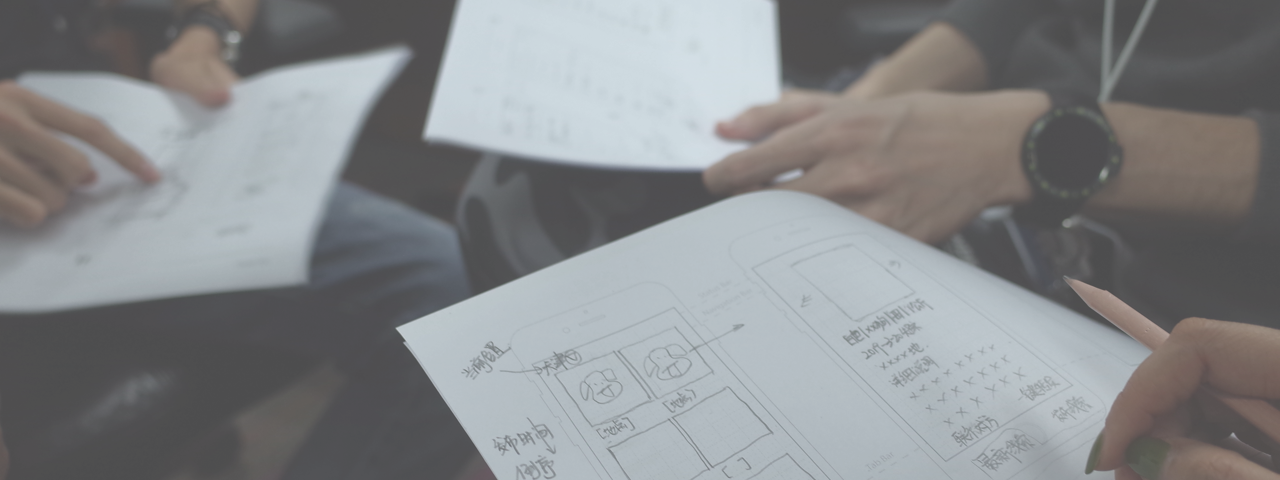
The Team Member Is Drawing the Prototype
When it comes to planning, you will likely skip directly to 'Design a design workshop' and 'What design tools and cases are selected to support the design workshop', which is similar to the fresh designer who ignores the analysis and starts to sketch a prototype. The planning can help the facilitator find out right way, and start with goals and strategies. Planning is an essential part of a design workshop.
Even so, the process been reaching an agreement will encounter unexpected changes. Here is the case, we encountered the challenge that the product owner adjusting the attendance time many times and even being absent during the the design workshop. Thanks to the structure of the design workshop and the preparation of planning, this situation has not caused much impact on the overall process. This indirectly proves that the time spent in planning is critical for the design workshop.
The composition of the plan
An effective plan consists of three parts: goals, questions, and processes. By declaring goals, clarifying questions, and building an agenda, design activities in the design workshop can serve the overall goal.
Declaring goals: ideal or final output of the design workshop
When declaring the goal, you need to consider ideally what the final output of the design workshop is. The agenda is also aligned with the goal. Every step of the agenda will move towards the ideal state. In general, the final output contains the following forms:
- Consensus
- Deeper and broader understanding of issues
- Generation of ideas
- Further, strengthen empathy in your team
Clarifying questions: Collecting information to achieve overall goal by organizers
There is a gap between the current and the target status, and the missing information needs to be added to make the team members stand on the same page which helps to get closer to the final target. Facilitators can collect information by setting questions. For example: Who are the participants? What is their educational background and work experience? What are their needs? How is the current design workshop and what are the shortcomings? What can be done to improve? How to measure the design workshop in the future? etc. Clarifying questions helps the emergence of models, and provides scope for issues in the agenda and a framework for conducting.
Building goal-oriented agenda: Collecting information to conduct all the design activities by participants
Before conducting the design workshop, aligning questions and agenda is the last step in planning. What processes in the agenda to choose what questions to solve and how? For example: how to reach a consensus and achieve a win-win situation? This can be achieved through voting and prioritization; how to generate ideas quickly? It can be achieved through artifacts, notes prototyping, etc. How to grasp the research done by other organizers? It can be achieved through lightning talks, etc.
Need to consider
Based on the Initial framework of planning, you can start to consider the roles that the design workshop needs to introduce and the scale it can support. After the roles are finalized, they will review the preliminary framework of planning with all the organizers, discuss the details, and further clarify the positioning of different roles and the tasks to be completed in the design workshop.
Roles
There are two main kinds of roles in design workshop, organizers and participants. According to requirements, the role of specific organizers can be defined, including facilitator, product owner, coach, assistant, etc. The types of the organizer vary according to the size of the design workshop. Participants been grouped appropriately are mainly the key persons who perform design activities.
For example, the roles and their tasks in a five-day design workshop based on design teaching are as follows:
Facilitator. The facilitator is the coordinator of overall design activities, whether it is two hours or a week. The facilitator is mainly responsible for the design workshop.
- Clarify the goals of the design workshop, the questions that need to be solved, and the agenda.
- Assist other organizers.
- Advance every session in the design workshop.
- Control the quality of the overall design workshop.
Product Owner. The product owner is usually the team's product manager. It needs to declare a measurable and deliverable design challenge for the design workshop based on the agenda and is responsible for the final output.
- Provide business background materials for all members of the design workshop.
- Declare the design challenge and clarify goals, tasks, and expected effects for participants.
- Invite the stakeholders involved in the review and evaluate the final output.
Coach. Usually, it appears in design workshops with teaching tasks. The coach mainly guides the participants to understand and perform the tasks. It also uses design tools and methods to solve problems, making the process interesting, the output diversified, and the evaluation quick.
- Familiar with design methods and tools.
- Responsible for the controlling process to ensure the effect.
- Responsible for the teaching quality of the process.
Assistants. The responsibility of assistants is to give assistance to the coach.
- Ensure the attendance of trainees.
- Cooperate with coaches.
- Prepare courseware and materials.
- Record with photos and videos.
Participants. Participants play a key role in the design activity, also the inspectors of the quality evaluation of the design workshop.
- Collaborate on a project, and perform tasks assigned.
- Participate in design activities actively.
- Prepare final output.
Scale
Scale is limited by human, financial, and material supports as well as time and space. When it comes to the scale of the design workshop, it is inevitable to talk about five dimensions: participants, budget, materials, time, and space.
Participants. Participants are the most creative people in the design workshop. They will collaborate to perform all the design activities under the guidance of the organizer. Participants may vary from in-house teams, multi-team, and even cross-field teams. The more complex the organization of the participants belongs to, the more consensus needs to be built, the longer it takes, and the more materials prepared. After researching the persona of the participants, it is necessary to revise the agenda that is most suitable for them.
Budget. Small-scale, such as 3 people in a half day, a design workshop organized within the company, the cost is almost negligible for large companies. However, for start-ups, venue rental fees may also need to be considered. Generally, the budget of a design workshop roughly includes venue rental fees, material costs, workshop snacks costs, organizer's remuneration, participants' rewards, and gifts after class research.
Materials. Materials are one of the most moving touchpoints of a design workshop, reflecting the attitude of the organizer and the quality of the workshop's teaching. Materials in different stages can be prepared as follows:
- At the planning stage: agenda, the brief of the design workshop, templates of keynote and email, etc.
- At the conducting stage: the brief of the design process, tools needed during the design process, etc.
- At the reviewing stage: interview outline, questionnaire, review, etc.
Time. The duration of the design workshop conducting stage includes less than 1 day, 1 to 2 days, 3 to 5 days, and more than 5 days. Rationally scheduling for three stages is required. The shorter the time, the more concise and focused the process; the longer, the more design activities you can choose, and the more materials and exercises need to be prepared.
Space. Make as much space as possible and provide removable and removable tools if possible. This includes mobile whiteboards, tables and chairs, etc. Sufficiently wide planes and elevations provide endless possibilities for participants to think about, even the possibility of overturning. Dschool mentions 'It is a tool for helping people intentionally manipulate space to ignite creativity.' in Make Space. By changing the environment, the way of communication, work, entertainment, and innovation between organizers and organizers, organizers and participants, participants and participants are enhanced.
The suggestion
If you are a facilitator, the first thing to do is to clarify the purpose of the design workshop, and whether there is a high-level overall goal. If so, under the guidance of this, explore what the design workshop might provide and what the ideal output would be. Combined with the real situation, how many roles can be involved in and which factors of scale are restricted to varying degrees, so that we could determine the final output of the design workshop.
Based on the goals of the design workshop, through the analysis of roles and scale, perhaps you already know who to invite to participate in what kind of scale design workshops. Using the duration as the main variable, the following explores the impact of duration on conducting the design workshop.
Less than one day
Due to the limited duration, the role and scale will be lightweight.
- Goals: Teaching-oriented, supplemented by exercises.
- Questions: Clarify the gains of participants.
- Processes: Teaching a single design method or explaining a design case, etc.
One to Two days
Based on the lightweight version, the participation and enthusiasm need to be improved, and more roles need to be involved.
- Goals: Through fast-food teaching and exercises to catch up on insights.
- Questions: Clarify the gains, the processes, and goals.
- Processes: Teaching design methods, explaining design cases, testing and evaluation, etc.
Three to Five days
Based on the fast-food version, participation and enthusiasm need to be improved, and more roles need to be involved.
- Goals: Through immersive teaching and exercises to catch up insights and deliver the output.
- Questions: Clarify the gains, the processes, and the goals and deliver the output.
- Processes: Teaching design methods, explaining design cases, testing, evaluation, and iteration, etc.
More than Five days
Duration could be as long as summer camp. According to the syllabus and course goals, it can be disassembled into multiple design workshops.
- Goals: Teaching and exercises like summer camp with multiple activities to accumulate personal experience and gain team growth.
- Questions: A syllabus is needed, and also clarifies the gains, the processes, and goals, and delivers the output in every design workshop.
- Processes: Teaching design methods, explaining design cases, testing, evaluation, iteration, milestone and graduation, etc.
How to conduct a design workshop
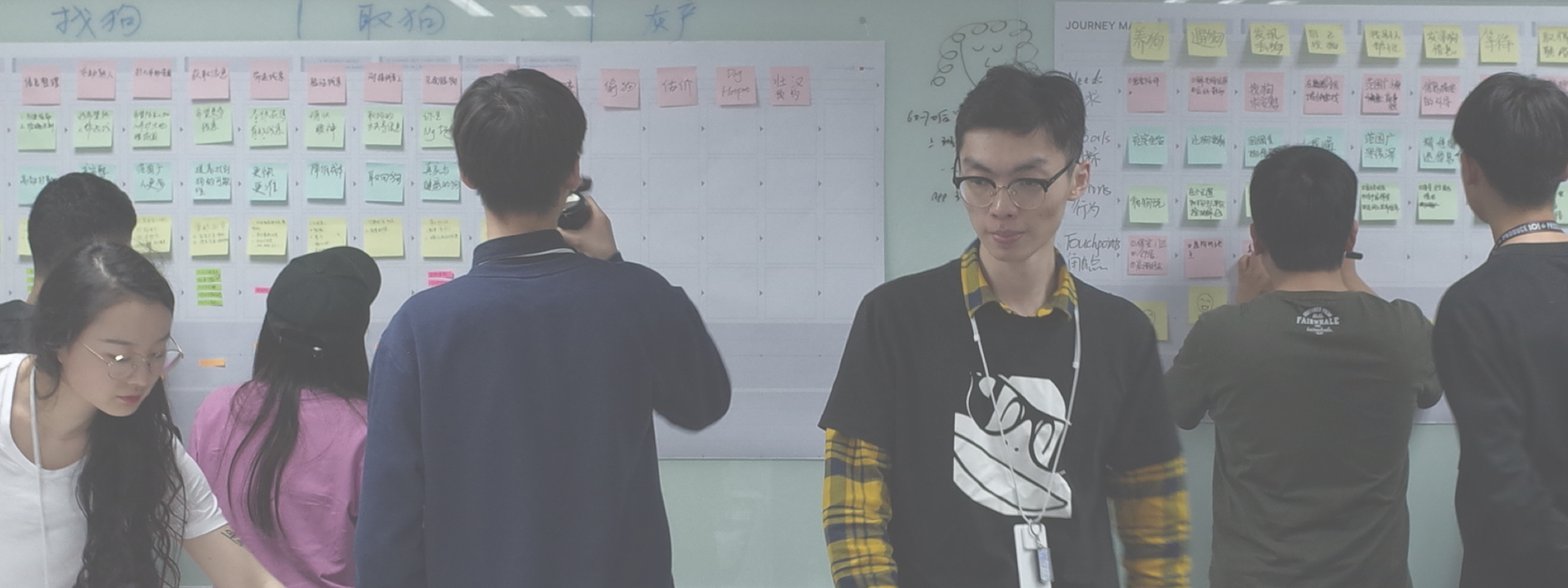
The Team Member Is Writing Needs on a Journey Map
The three steps of the planning stage are the foundation to guide the conducting design workshop. By turning the output of the first three steps into formal, shared materials, participants will have a better understanding of the design workshop.
The framework of conducting a design workshop
Opening
In most cases, the opening is starting with the facilitator. Within 10-15 minutes, the opening needs to include the following:
- Self-introduction. The self-introduction of the facilitator is the first impression of the design workshop. Everyone has their own unique style. A sincere self-introduction will leave a nice impression on the participants.
- Grouping and icebreaking. Large-scale design workshops usually need to group participants to increase motivation and initiative. Grouping and icebreaking a worthwhile ways to bring the participants closer through design activities in the group and understand each group through sharing ideas among them.
- Introduce of agenda. Briefly describe the structure and highlights of the design workshop. Within the limited time, you can shortly introduce the process and deliver the resources to participants. At the same time, clearly inform the participants what can be learned throughout the design workshop.
- Introduce the task. Use the agenda to declare the tasks for participants.
- Introduce the topic. The topic can be a design challenge, usually declared by the product owner if there is a role in your planning.
- Introduce the organizer. Don't forget assistants who support you and the other organizers in the next processes.
Q & A.
Design activity
After the opening, we officially entered the design processes where the participants were the action subjects. Each process is from two hours to four hours. If the time is too long, it will easily cause fatigue for the organizers and participants. Breaks could be set up to help all of them get some rest. All the organizers serve the participants, and provide guidance to the participants based on their own process, in order to help participants complete the core tasks on time and in volume. Each process is mainly divided into three modules:
- Instructions. The organizer (usually a coach) of this process will provide participants with theory, tools, and materials, combined with best practices, to clarify what the process does and how to do it.
- Performance. Under the guidance of the organizer, each group conducts design discussions separately. The organizer needs to observe and give feedback when appropriate to help the team not go off the topic.
- Evaluation. At the end of the process, the organizer can check the progress of each group. On the one hand, further guides the groups to help convergence; on the other hand, in the design workshop involving multiple days, the connection between the organizers needs to be made to ensure the coherence of the user experience. At the same time, the process of design activities can be documented by assistants.
The conclusion
The conclusion is directed by the facilitator as same as the opening, which includes three parts:
- Review. Briefly trace back what the design workshop has done in the past processes, and try to find the highlight moments that will help enhance the atmosphere.
- Summary. After most of the processes are finished, there will be a conclusive process to evaluate the final output of each team, which may be professional reviews, stakeholder reviews, etc. Duration depends on the design activity, this process needs to avoid being too serious, usually can be conducted with some interactive forms, such as roadshows, public voting, etc.
- Thanks & Feedback. All organizers and participants are thanked and invited to engage in feedback to help with subsequent improvements.
Documents
After the design workshop is conducted, the organizer can sort out the design workshop materials. The materials mainly include:
- Evaluation and collection of outputs. After the design workshop, the outputs could be collected and shared with other stakeholders. Using the information gathered during the whole journey and the final output, we could take action to advance the overall goal.
- Feedback and suggestions. At the end of the design workshop, we could learn through the questionnaire survey. Based on the feedback of the participants and the discussions of organizers, we can upgrade the design workshop in the next.
The framework of conducting design activity
Generally, we use more common design thinking as the skeleton of the process, such as:
- IDEO: Design Thinking
- Design Council: Double Diamond
- Google Ventures: Design Sprint
- SAP: Design-Led Development
Although the characteristics of each organization and the goal of creating a methodology are different, in general, all these methodologies are related to the basic logic of "divergence, convergence" + "verification, iteration." Also, Tencent's design teams also have similar variants. With the skeleton, the next step is to select the appropriate design tools for the preview based on the topic of this design workshop. The to-do list for the rehearsal includes:
- Clarify the topic. Declare the topic and tasks clearly, so that all organizers have a consistent understanding of the topic.
- Align division of labor. Clarify the goals and tasks of each role in the process.
- Collaborative discussion. The coaches at each process explained their plans and discussed with all the organizers to come up with a set of overall feasible and smooth design activities.
- Prepare materials. Collect the tools and materials needed for each process. If custom tools need to be made in advance, you need to set aside the period of design and production.
The following is an example of a framework of Tencent CDC:

Tendent CDC's Framework
Tips
Providing a meticulous experience is the key to a good design activity. Link all the processes together and check whether each process is reasonable, coherent, and consistent. In addition, the process is also inseparable from the guidance of the coach and the preparation of sufficient materials. Here is a common bill of materials:
- One pen per participant
- One note per participant
- Ten A3 size sheets per participant
- Two full-size sheets per team
- One scissor per team
- One roll of tape per team
- One box of markers per team
Lastly, the Design Workshop condenses the efforts of every organizer and participant, and the two sides are synergistic, mutually supportive, and facilitative, which requires every member to be able to actively participate, regardless of the outcome. As Design Sprint mentioned, the result may not necessarily be a complete victory but may be partially successful, or unsuccessful with guidance. Please don't be discouraged, after all, every time you participate and share, you will gain something new.
Reference
- https://www.nngroup.com/courses/facilitating-ux-workshops/
- https://designsprintkit.withgoogle.com/
- https://dschool.stanford.edu/resources/make-space-excerpts
© 2024 Xiang PENG. All Rights Reserved.